Why Everyone is Buying the Kodak Ektar H35N (Full Review)
I've been using the Kodak Ektar H35N for several months now, and between weekend walks, trips across the city, and a few low-key portrait sessions, I feel like I know this little camera pretty well. It arrived as one of those cameras that feels like a purposeful throwback: compact, simple, and unapologetically film-first. In this review I’ll share what I loved, what frustrated me, how it performs in the real world, and who I think should buy one (and who should not).
Quick overview — what the Ektar H35N is (and what it isn’t)
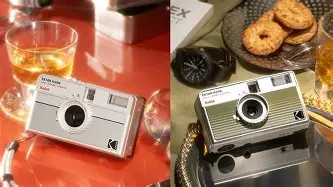
In my experience, the Kodak Ektar H35N is a compact 35mm film camera built around the half-frame philosophy: you get twice the frames per roll compared to full-frame 35mm shooting. It's a straightforward point-and-shoot-style camera with a fixed lens and minimal controls, designed for people who want an easy, fun, and economical way to shoot film without the complexity of a fully manual SLR. It isn’t a replacement for an SLR or rangefinder if you need full control over shutter speeds and apertures — it’s closer to a fast, friendly daily shooter.
Design and build: retro without being fragile
When I first picked it up, the H35N surprised me by feeling more solid than its size implied. The body is compact and light enough to carry in a jacket pocket — I found myself grabbing it on errands more often than I expected. The finish has a slightly textured plastic that resists fingerprints, and the controls are simple and tactile: a film-wind lever, a clear shutter button, and a small viewfinder. The shutter release is satisfyingly clicky, and the wind mechanism feels robust after months of use.
One thing I appreciated was the ergonomics for casual shooting. The thumb rest and front curve make it comfortable to hold for several frames in a row. On the flip side, folks with large hands might find the body a bit cramped; I noticed my pinky sometimes wanted more purchase when shooting extensively. Also, while it feels solid, the compactness means it lacks the reassurance of metal-heavy vintage SLRs — drop it and it might not be happy.
Handling and shooting experience
What I found was that the Ektar H35N makes film photography addictive again. The half-frame format doubled the fun: a 36-exposure roll suddenly becomes 72 frames, and that encourages experimentation. I was less precious about each shot and ended up making much more varied contact sheets.
The viewfinder is clear enough for street work, but it’s basic — there’s no fancy parallax correction or framing guides for different focal lengths. I did notice some framing mismatch at the edges, especially when shooting very close subjects. For typical scenes — people on the sidewalk, storefronts, or quick travel shots — the viewfinder works well.
I used the camera primarily in daylight and on overcast days. Framing is fast, composing is intuitive, and the camera encourages quick decisions. For deliberate low-light work I found the H35N limiting: it isn’t designed for long exposures or very slow shutter speeds, so I often needed flash or faster film to rescue a dim scene. That said, I did test it in dusk conditions with higher-ISO film and got moody, grainy tones that I actually liked for a certain aesthetic.
Image quality and lens behavior
Over a range of films, what surprised me was the lens’ character. It’s not a pro-level optic meant to win sharpness competitions, but it renders portraits and street scenes with a pleasing look: decent center sharpness, softening toward the edges, and a gentle fall-off that suits the half-frame format. Colors and contrast depended much more on the film I chose than on the camera; when paired with a punchier color film I got vibrant, saturated frames, whereas classic film stocks gave me that timeless, filmic palette.
Find top-rated Cameras & Photography products at great prices.
View Offers →I noticed mild vignetting on some rolls when shooting wide scenes — enough to be noticeable if you pixel-peep, but subtle in everyday prints. Distortion is limited and the lens keeps straight lines well enough for casual architecture shots. Close-ups can be a little soft unless you’re careful with focus distance; the camera’s zone-style handling means macro-level detail isn’t its strong suit.
Half-frame realities: benefits and compromises
The half-frame format is the heart of what makes the Ektar H35N fun. Here are the tangible benefits I experienced:
- Economy: I could take twice the shots per roll, which made experimenting cheaper and less wasteful.
- Storytelling: half-frame lends itself to diptychs and sequences — I started intentionally pairing frames like a visual diary.
- Portability: smaller negative area exaggerates the impression of a compact camera that’s always with you.
But there are trade-offs I noticed after months of scanning and printing:
- Smaller negatives mean less room to crop and enlarge. If you plan to make big wall prints, the half-frame frames show grain and loss of crispness earlier than full-frame 35mm.
- Scans require more careful handling: I found I had to increase resolution and spend more time dust-removing than with my full-frame film shots.
- Some labs and scanning services treat half-frame as a novelty, so be ready to explain your scanning preferences if you want the best results.
Flash and low-light shooting
In my experience, the built-in or on-board flash (depending on the specific configuration of the unit I tested) is fine for fill and for rescuing faces at night, but it’s not a creative strobe. It’s best treated as a utility for getting usable frames rather than a tool for shaping light. I was often happier pushing film and embracing shadow rather than relying on the flash because the flash light felt a bit harsh close-up.
For low-light, I tended to load faster film or embrace the grainy character of high-ISO stocks. The camera’s general limitations in slow-shutter scenarios mean I didn’t attempt long exposure landscapes with it — for that I still reach for an SLR and tripod. The H35N shines when light is present and you want quick, candid captures.
Day-to-day durability and quirks
After months of carrying it casually, the H35N still works reliably. My main small annoyances: the film counter can be tiny and hard to read in low light, and the flash recharge (on the model with flash) is noticeable between pops — don’t expect rapid multi-flash bursts. I also noticed the lens cap mechanism (if your unit has one) can be fiddly; I started using a small cloth wrap in my bag instead.
One thing that bothered me early on was that the camera encourages a fast-shooting habit that can produce a lot of mediocre frames. That’s not the camera's fault — it's mine — but it is a real change if you’re used to slow, deliberate exposures.
Shop the latest Cameras & Photography picks on Amazon.
Shop Amazon →Comparison: Kodak Ektar H35N vs. common alternatives
| Feature | Kodak Ektar H35N | Compact Full-Frame Point-&-Shoot | Classic SLR (used) |
|---|---|---|---|
| Format | Half-frame 35mm (double frames per roll) | Full-frame 35mm | Full-frame 35mm (interchangeable lenses) |
| Portability | Very compact, pocketable | Compact, pocketable | Bulkier, needs bag |
| Control | Minimal, point-and-shoot style | Minimal to moderate | Full manual control |
| Image flexibility | Less room to crop; good for sequences | More flexible for prints and cropping | Highly flexible with lens choices |
| Best for | Street, travel, daily storytelling | General snapshot, travel | Serious creative work, low-light, portraits |
| Cost of shooting | Lower per-image cost (double frames) | Standard film costs | Higher (lenses, accessories) |
Pros & Cons
- Pros:
- Twice the frames per roll — great for experimentation and travel diaries.
- Compact and lightweight — easy to carry daily.
- Simple controls make it accessible for beginners and liberating for pros who want to shoot casually.
- Friendly lens character that produces pleasing, vintage-adjacent images.
- Encourages creative sequencing and storytelling because of the half-frame layout.
- Cons:
- Smaller negatives limit enlargement and heavy cropping.
- Limited low-light capability — not ideal for long exposures.
- Viewfinder is basic; edge framing can be inaccurate at close distances.
- Scanning half-frame requires more attention to resolution and dust cleaning.
- Not aimed at photographers who want full manual control.
Who should buy the Ektar H35N?
In my experience, the Ektar H35N is perfect for several types of users:
- Newcomers to film who want an affordable and forgiving way to learn without wasting expensive full-frame rolls.
- Travelers who want a lightweight camera that doesn’t scream “expensive gear” and can handle quick snapshots.
- Photographers who enjoy visual journaling — the half-frame layout makes it really fun to sequence images.
- Anyone who wants a camera they won’t be precious about and can treat as a daily carry.
If you’re someone who prints large images, wants precise manual control, or shoots professionally in low light, this camera won’t fully satisfy those needs. For those workflows I still reach for my SLRs and medium-format tools.
Buying guide — what to check and how to get the most out of it
After using the camera for months, here are practical tips that helped me get the most value:
- Decide if half-frame suits your goals: If you like sequencing and economy, go for it. If you want large prints, consider a full-frame alternative.
- Choose your film thoughtfully: Bright daylight scenes look great on standard color film; for moodier images try higher-ISO stocks and embrace the grain. I started with ISO 200–400 and switched to 800 for evening walks when I wanted texture.
- Scan at higher resolution: Because the negatives are smaller, scanning at a higher DPI helps retain detail and gives you more flexibility in cropping. Expect to spend a bit more time on dust removal in post.
- Protect the lens and keep a soft cloth handy: The camera’s compact lens is exposed more in tight bags; a small soft pouch or cloth helps avoid scratches and smudges.
- Test your local lab’s half-frame scanning: Not every lab treats half-frame the same way. Ask how they handle orientation and whether they can scan each half-frame as a separate image (some labs stitch two halves into one full-frame scan by mistake).
- Practice framing close subjects: The viewfinder can mislead at the edges; back up a step for headshots and move closer for environmental portraits after checking a few test frames.
- Bring spare rolls: The temptation to shoot a lot is real. I usually carried an extra roll or two so I could keep the camera loaded and shoot liberally.
Final thoughts — my verdict after months of use
After several months with the Kodak Ektar H35N, what I found was a delightful companion for everyday photography. It reignited my desire to carry a camera everywhere and let me experiment without worrying about the per-shot cost. The half-frame format changed how I composed sequences and gave me a playful outlet for visual storytelling. The camera’s limitations — smaller negatives, basic low-light performance, and a simple viewfinder — are real, but they’re part of the charm if you accept them upfront.
I was surprised by how quickly it became a go-to for city walks and short trips. One thing that bothered me was the extra time scanning half-frame negatives at home, but that’s a trade-off I gladly made for more frames and more spontaneity. In short: if you want a cheerful, compact film camera that encourages shooting and creativity, the Ektar H35N is worth considering. If your priorities are large prints or meticulous technical control, you’ll be happier with a full-frame SLR system.
For me, it reconnected me with the joy of shooting without overthinking — and that made every roll feel like a small adventure.