5 Hidden Features of the Lexar Workflow Go You Must Know About
The Lexar Workflow Go is often purchased as a compact, portable solution for moving files between devices, but it has a set of lesser-known features that make it especially useful for laptop users, mobile creators, and anyone who needs a reliable on-the-go storage assistant. This article unpacks five of those hidden capabilities, explains how they apply to real-world workflows, and offers a practical review, a clear pros & cons list, a comparison to similar products, and a buying guide for readers weighing this device against other storage options.
Introduction
Laptop owners—whether students, photographers, video editors, or business professionals—care about speed, compatibility, and convenience. The Lexar Workflow Go was designed to bridge desktop and mobile workflows without the bulk of an external hard drive. While its basic function (moving files between devices) is obvious, the device also includes features and design choices that are less visible at first glance yet significantly impact everyday use. Understanding these features helps buyers decide whether the Workflow Go fits their needs and how to get the most value from it.
Brief Product Overview
At a glance, the Lexar Workflow Go is a pocket-sized storage solution intended to work with modern laptops, tablets, and phones. It emphasizes plug-and-play compatibility across platforms and often ships in multiple capacity options to suit a range of storage needs. What sets it apart from typical thumb drives are small but powerful design choices that support cross-device workflows and mobile-first use cases.
5 Hidden Features Explained
1. Native Mobile OTG Compatibility
One of the most practical hidden strengths is how the device behaves with mobile phones and tablets. Many modern laptops have USB-C ports, and a number of compact storage devices include dual connectors. The Lexar Workflow Go is designed to function as a USB On-The-Go (OTG) device when used with compatible Android phones and tablets, letting users move photos and video off their device without a computer.
Real-world use: A wedding photographer can quickly offload a day's worth of RAW photos from a phone used as a second camera, freeing the phone for calls or additional shots. For travelers with limited cloud bandwidth, OTG transfers create immediate local backups.
2. Integrated File-Management Functionality
Beyond simple file storage, the Workflow Go includes software or companion app features that streamline common tasks: one-touch backups, folder synchronization, and basic file organization. The device’s bundled utilities are not merely helpers; they remove friction from repetitive workflows by allowing scheduled or quick manual backups without digging into the laptop’s file manager.
Real-world use: Students juggling group projects can create a synchronized folder on the Workflow Go that automatically updates before presentations. Content creators can trigger backups of the camera roll immediately after a shoot, reducing the risk of data loss.
3. Cross-Platform Friendly Formatting
Formatting choices matter when moving files between macOS, Windows, and mobile devices. A hidden but important benefit is how the device handles file system compatibility. Out of the box, many such devices use exFAT or offer easy reformat options so large files (like 4K clips) move freely between systems without the size limits of FAT32. Additionally, some utilities include quick-format presets for different operating systems.
Real-world use: A filmmaker moving 4–8 GB clips from a laptop to an editor’s MacBook will appreciate that transfers don’t hit artificial file-size limits. Small teams that use mixed platforms avoid time-consuming reformatting or splitting of files.
4. Hardware-Empowered Security Options
For business users and professionals handling sensitive files, physical devices that support encryption or password-protected secure areas are a game-changer. The Workflow Go supports secure containers or password-protected folders through its management software, adding a layer of protection without requiring third-party encryption tools.
Find top-rated Laptops & Computers products at great prices.
Browse Now →Real-world use: A consultant carrying client proposals or confidential spreadsheets can store them in the secure area and plug the device into a laptop at a conference without exposing the files to the host machine’s default file system.
5. Durable, Laptop-Friendly Design Choices
Small design refinements—such as reversed-cap covers, low-profile housings for tight laptop ports, robust connectors, and lanyard attachment points—are subtle but valuable. These physical aspects make the device less likely to block adjacent ports on a laptop and more resilient to travel-related wear and tear.
Real-world use: A student who works in crowded coffee shops can leave the Workflow Go plugged into a laptop’s USB-C port during a quick break without worrying that a cable snag will dislodge or damage the drive. The compact form factor also fits into sleeve pockets or camera bags without adding bulk.
Detailed Product Review and Analysis
Strength in simplicity is a recurring theme with the Lexar Workflow Go. It doesn’t try to be a multi-function hub; instead, it focuses on solving the core pain points of file transport in modern mixed-device environments. The software pairing—while minimal—covers the essentials: one-click backups, a secure folder option, and formatting tools optimized for cross-platform use. This is valuable for users who prefer to avoid dealing with multiple third-party apps and scripts.
Performance-wise, the Workflow Go performs well for everyday transfers: photo libraries, office documents, and medium-size video files move quickly and predictably. It is designed to slot into existing mobile and laptop workflows rather than replace larger-capacity solutions like portable SSDs. That said, for professionals working with very high data rates (RAW cinema workflows, high-volume drone footage) a dedicated high-performance NVMe external SSD will still be necessary.
Longevity and reliability are practical concerns: Lexar’s hardware typically emphasizes solid connectors and simple mechanical protection. For frequent travelers and field photographers, the combination of a secure container, small size, and durable housing reduces stress on both the device and the user’s workflow.
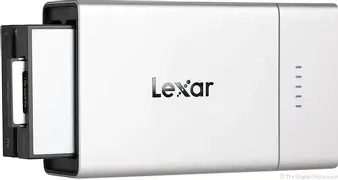
Pros & Cons
- Pros
- Compact, pocketable design that complements modern laptops
- Mobile OTG compatibility for quick phone-to-storage transfers
- Companion tools for scheduled backups and secure folders
- Cross-platform friendly formatting reduces friction between macOS, Windows, and mobile devices
- Durable build and laptop-friendly connector design
- Cons
- Not a replacement for high-performance USB-C NVMe SSDs in heavy video production workflows
- Bundled software provides basic utilities but does not replace advanced file management suites
- Some advanced users may prefer open encryption standards rather than proprietary secure containers
- Physical connectors can still be vulnerable to accidental stress if left plugged in during transit
Comparison Table: How the Workflow Go Stacks Up
| Feature | Lexar Workflow Go | Typical Portable SSD | USB Flash Drive (Basic) |
|---|---|---|---|
| Primary use case | Cross-device transfers, mobile OTG, scheduled backups | High-speed editing and large file storage | Simple file transfers between computers |
| Mobile compatibility | High (OTG and companion app functionality) | Varies (often requires adapter) | Limited unless dual-connector |
| Performance | Good for photos and medium video files | Very high (NVMe speeds) | Medium to low |
| Security features | Password-protected containers via software | Often supports hardware encryption | Rarely |
| Form factor | Ultra-compact, laptop-friendly | Portable but larger | Varies from tiny to full-size |
| Best for | Traveling professionals, photographers, students | Video editors and power users | General-purpose quick swaps |
Practical Buying Guide
When evaluating a Lexar Workflow Go purchase, buyers typically consider the following factors. These considerations align with what matters most to laptop users and mobile creators in day-to-day scenarios.
1. Capacity Needs
Decide on capacity based on typical use. For document-heavy work and photo libraries, mid-range capacities are often sufficient. For video capture or frequent RAW photography, choose larger capacities or pair the device with cloud or SSD backup options. Consider how often files will be moved off the device—if it serves as a temporary buffer, smaller sizes may be adequate.
2. Compatibility and Connectors
Confirm connectors match primary devices. Many laptops now use USB-C exclusively, but adapters are sometimes necessary for older hardware. If users intend to plug the device into phones, ensure OTG support and look for dual-connector designs.
3. Software and Security Features
Check what the bundled software offers. Scheduled backups, secure containers, and easy-format options reduce setup friction. If strong security is required, verify whether the solution uses a standard encryption protocol or a proprietary container and whether it meets any organizational compliance requirements.
Shop the latest Laptops & Computers picks on Amazon.
Browse Now →4. Durability and Portability
Travelers should prioritize robust housings and low-profile designs to avoid damage while on the move. A small loop or hole for a lanyard can be surprisingly useful for attaching to camera bags or laptop sleeves.
5. Performance Needs
Determine whether the device will be used for final editing work. If so, an NVMe SSD is the better choice. For transferring files, creating backups, or moving content between devices, the Workflow Go provides a sensible balance between speed and portability.
6. Warranty and Support
Review manufacturer warranty and support options. A multi-year warranty and responsive customer support reduce long-term risk, especially for professionals who rely on portable storage day-to-day.
7. Real-World Scenarios to Test
Before relying on the device in production, test it with typical workflows: transfer a batch of photos from a phone, backup a project folder from a laptop, and verify secure folder access on another machine. These quick tests reveal any formatting or compatibility surprises early.
Who Should Buy the Lexar Workflow Go?
The Workflow Go is aimed at users who prioritize portability and cross-device convenience over raw speed. It is an excellent fit for:
- Photographers who need a compact way to offload camera or phone shots in the field
- Students and professionals who shuffle large project files between laptops and tablets
- Travelers and remote workers who require reliable, on-the-go backups without relying on internet access
- Anyone who wants a small, durable drive that reduces friction between macOS, Windows, and mobile devices
Conversely, those whose work requires sustained high-throughput data transfers—such as 8K video editing or continuous disk-intensive operations—should consider a dedicated portable SSD instead.
Maintenance and Tips for Longevity
- Safely eject the device before unplugging to prevent file system corruption.
- Keep the companion software updated for the latest compatibility and security fixes.
- Periodically check the device’s file system for errors if large transfers are frequent.
- Use a consistent backup routine: the Workflow Go is a tool for mobility, not the only repository of important data.
Conclusion
The Lexar Workflow Go is more than a simple storage stick—its hidden features like mobile OTG compatibility, integrated file-management utilities, cross-platform formatting conveniences, basic hardware-level security options, and thoughtful physical design all contribute to smoother laptop-centric workflows. For users who regularly move between devices, travel for work, or capture content on mobile devices, these subtle advantages add up to real daily value. While it does not replace the performance offered by high-end portable SSDs, it occupies a useful middle ground for portability, convenience, and dependable functionality.
In short, buyers who need a low-friction solution to bridge laptops, phones, and tablets will find the Workflow Go a compelling addition to their toolkit—so long as they match capacity and performance expectations to their specific use cases.